
Why West Philadelphia Has Become a Major Center for Life Sciences
West Philadelphia has become an increasingly important part of Philadelphia's life sciences economy, creating a concentration of research institutions, healthcare systems, biotechnology companies, laboratories and specialized development that is reshaping the area. For people looking for apartments in West Philadelphia, that growth is worth understanding because the expansion of the life sciences sector is influencing employment, development, transportation and the surrounding neighborhood. What was once primarily known for its universities and medical institutions has evolved into a sophisticated innovation hub with connections extending throughout Philadelphia and beyond.
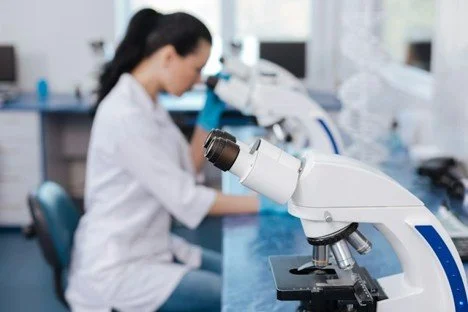
A Strong Foundation of Research Institutions
The growth of life sciences in West Philadelphia did not happen overnight. The area already had many of the ingredients needed to support a major research ecosystem.
The University of Pennsylvania, Penn Medicine, Children's Hospital of Philadelphia, Drexel University and the Wistar Institute all contribute research expertise, specialized facilities and highly educated talent. Their proximity to one another creates opportunities for researchers, physicians, students and companies to work within a relatively compact area.
University City is a globally competitive hub for innovation and scientific discovery. The district reports nearly $2 billion in recent research and development investments across the neighborhood’s institutions and companies, along with $990 million in National Institutes of Health funding.
A discovery made in a university laboratory can eventually lead to a startup, clinical application, commercial product or manufacturing opportunity. Having universities, hospitals, researchers and businesses located close together can help those connections happen more efficiently.
From Research to Commercialization
One of the defining characteristics of Philadelphia's life sciences growth is the connection between academic research and private industry.
University City is not simply a place where researchers conduct experiments. It has developed infrastructure designed to help scientific discoveries move toward commercialization. Shared laboratory facilities, research centers, incubators and specialized office space give emerging companies places to begin and expand.
The University City Science Center has played an important role in that ecosystem, while developments such as uCity Square have brought together research, laboratory, office and other uses. This creates a progression that can be difficult for smaller or less established life sciences markets to replicate. A company can begin with an idea and research project, move into shared laboratory space, expand into larger facilities and eventually transition into specialized manufacturing environments elsewhere in Philadelphia.
That continuity can make the city more attractive to companies that want to grow without immediately leaving the region.
Specialized Laboratory Space Is Driving Development
Life sciences companies need very different buildings than conventional office tenants. Laboratories require specialized infrastructure, mechanical systems, safety features and floor plans that can accommodate scientific equipment and research activities.
As demand has grown, developers have responded with purpose-built laboratory projects throughout University City. These projects do more than add buildings. They create physical infrastructure for an industry that requires highly specialized environments.
Talent Is One of the Biggest Advantages
Buildings alone cannot create a successful life sciences cluster. Companies also need scientists, researchers, healthcare professionals, engineers, technicians and other specialized workers. West Philadelphia has an unusually deep talent pipeline because of its universities and medical institutions.
University City District reports more than 50,000 students enrolled at institutions in the neighborhood, while the area's major employers generate tens of thousands of jobs. This creates opportunities for graduates to remain in Philadelphia after completing their education rather than leaving for another major research market. The result is a cycle that can reinforce itself: universities produce talent, companies hire that talent, successful companies attract investment and new development creates additional opportunities.
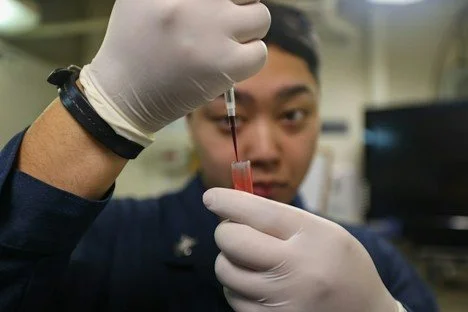
The Impact Extends Beyond the Laboratory
The growth of life sciences has implications far beyond scientists and researchers.
New laboratories require construction, engineering, maintenance, professional services and specialized suppliers. Companies need restaurants, transportation, housing and other services for their employees. New development can also encourage additional investment in surrounding commercial and residential properties.
This helps explain why the transformation of West Philadelphia is not limited to laboratory buildings. The broader neighborhood is evolving alongside the industry.
A Life Sciences Hub With Room to Grow
West Philadelphia's emergence as a life sciences center is the result of several advantages working together: major universities, world-class medical institutions, an established research community, specialized laboratory space, a strong workforce and growing private investment.
University City can support research and early-stage development, while other parts of Philadelphia, including the Navy Yard and emerging innovation districts, provide different types of space for companies at later stages.
That interconnected system is one of West Philadelphia's greatest strengths. Rather than relying on a single institution or industry, the area has developed an ecosystem in which education, healthcare, research, entrepreneurship and real estate development reinforce one another.
As new laboratories open, companies expand and research continues to move from the laboratory toward commercial applications, life sciences are becoming an increasingly visible part of West Philadelphia's identity. The growth represents more than a collection of new buildings. It reflects the emergence of a neighborhood where scientific discovery, business development and urban life are increasingly connected.